
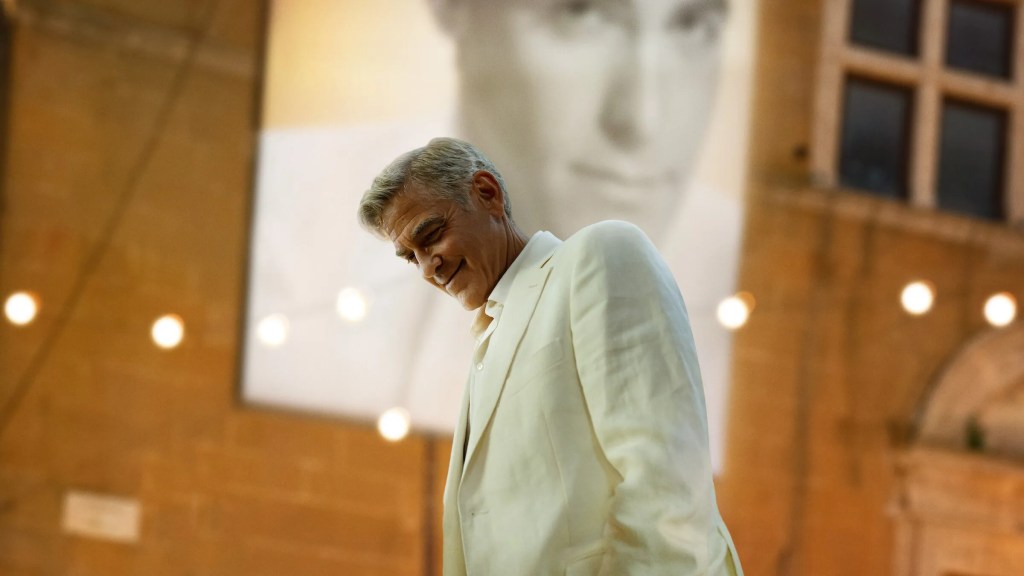
Your enjoyment of Noah Baumbach’s (director of Marriage Story) new Netflix film certainly depends on your enjoyment of George Clooney as a movie star, and the amount of empathy you can muster for a successful movie star who thinks they’ve spent too much time being successful and not enough time being a father, husband, or friend. These are serious first-world problems for the average Joe, but Jay Kelly touches on some intriguing themes, such as time being the only currency you cannot buy and feeling lonely without being truly alone.
Jay Kelly (George Clooney) is in the sunset of his acting career. At 60, he remains incredibly famous and has long neglected normal everyday activities. He is constantly surrounded by his team, including the unwaveringly loyal manager Ron (Adam Sandler) and the frustrated publicist Liz (Laura Dern). He maintains an estranged relationship with his firstborn daughter, Jess (Riley Keough), and a strained one with his youngest daughter, Daisy (Grace Edwards).
When his first director, Peter Schneider (Jim Broadbent), dies, Jay encounters his old university friend Timothy (Billy Crudup), a failed actor who still harbours resentment towards Jay’s successful career, which he believes should have been his. Following an altercation and a period of introspection, Jay decides to travel to Europe to make amends with Daisy and also collect a tribute award at a film festival in Tuscany.
It’s quite surprising that Clooney wanted to make a film where the character mirrors the audience’s perception of him so closely. None of us knows what Clooney is really like as a person, so for him to play a version of himself as if he is an arrogant, self-centred prick who never made time for his children and doesn’t respect his colleagues, is a very daring movie. It’s a lead performance that works to an extent, but perhaps leans too much in the woe-is-me territory for the general audience to get behind him fully. Clooney does well, and even notes that it’s challenging to play yourself in a movie because it’s hard for anyone to be themselves.
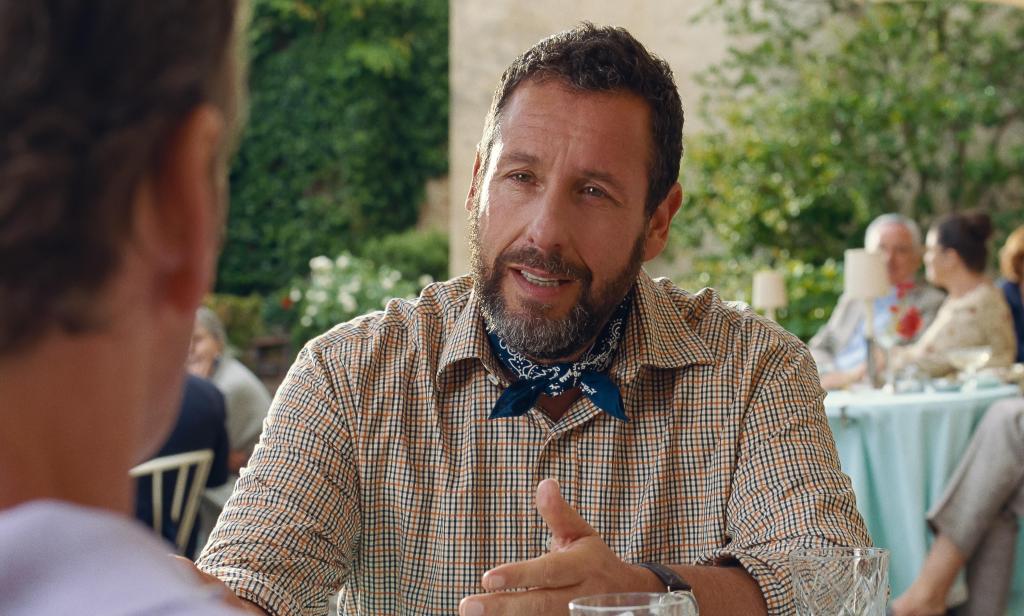
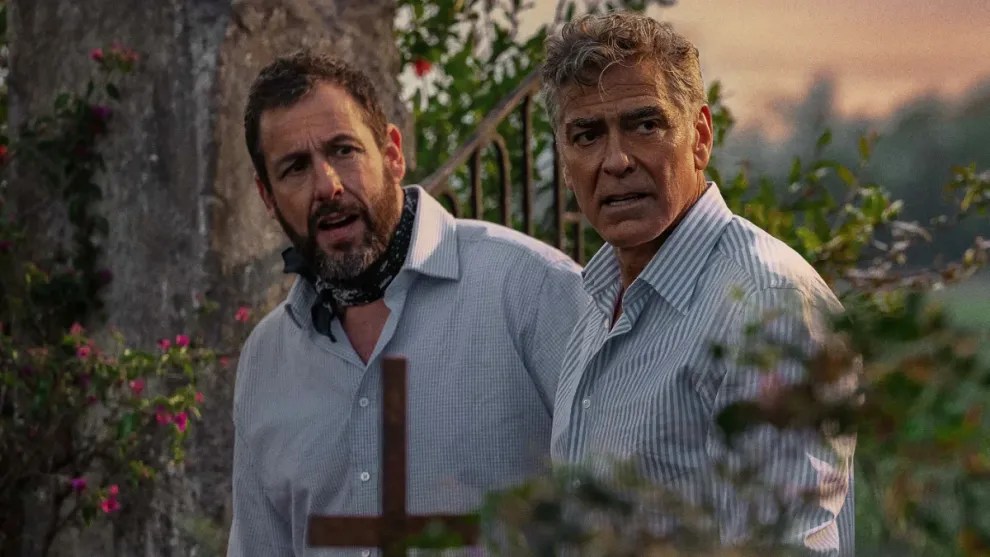
Sandler gets his dramatic acting shoes on and delivers an understated and engaging character whom you can’t help but feel sorry for. Ron has devoted his life to assisting Jay to become the mega star that he is, and Jay has no appreciation for this work or the sacrifices Ron has to make to be with Jay, such as missing his daughter’s tennis competition or losing other clients because he spends too much time with Jay. It is a solid performance by Sandler that is deserving of the Oscar nomination buzz, but you can’t help but feel that he should’ve been nominated for Uncut Gems, which is an infinitely better performance, but alas, you can’t change history.
The script is fine, but it runs quite a bit too long, with lengthy flashback scenes that perhaps give too much context about Jay Kelly’s life. The actual story for Jay Kelly isn’t compelling enough to make it a great film; there’s not quite enough substance, and the characters aren’t as well-developed as they should be. The character of Jay Kelly relies on your perception of Clooney, but it doesn’t go far enough with him to be interesting or inventive.
The ending of Jay Kelly feels like an obituary for Clooney’s career, which is strange, as he still has many great performances left in him. If he were to stop acting now, it would make sense for this to be his final film, but we all know that isn’t the case. When Clooney eventually passes away, I believe this film will gain its own significance, but while he is still alive, it comes across more as a statement on Clooney rather than a standalone film. Baumbach creates a film that both idolises Clooney but, at the same time, treats him as a flawed human being. It’s a daring film, but it doesn’t quite go far enough to be one of Baumbach’s best.
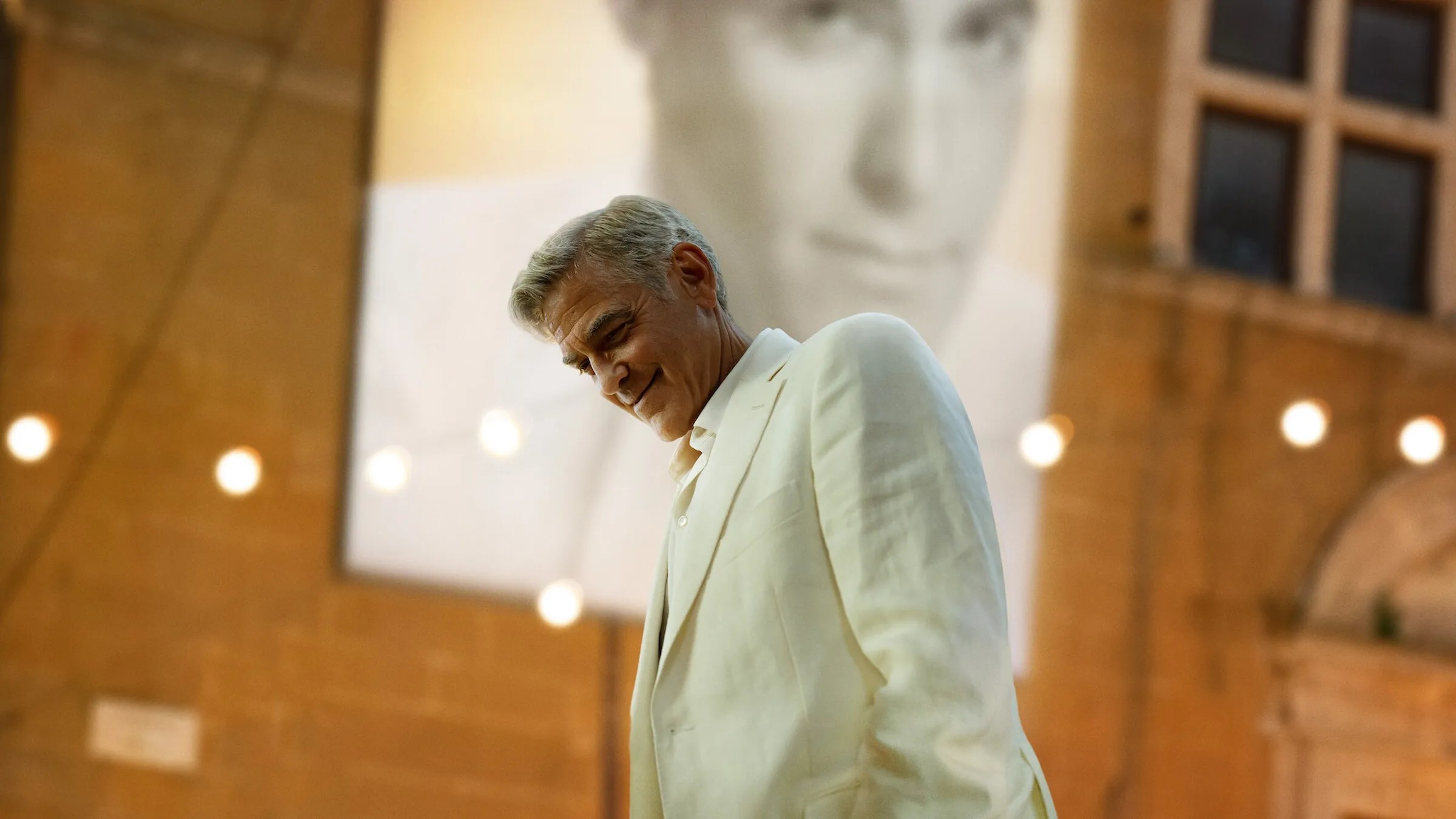
‘Jay Kelly’
Performances
Narrative
Technical
70
50
60
Total
60/100

 Jord On Film
Leave a comment