
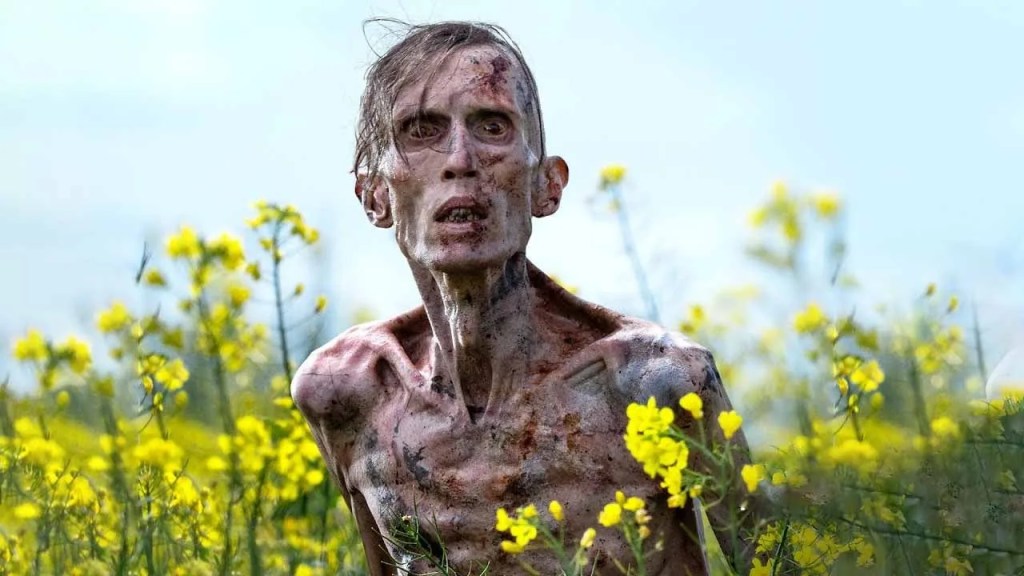
Danny Boyle and Alex Garland are reunited 23 years after reinventing and reinvigorating the zombie genre with 28 Days Later. That film had such a distinct style of filmmaking that made the infected utterly terrifying, while the folks left behind to survive were even scarier. Now, with this first part of a trilogy of films, 28 Years Later begs the question: What if the apocalypse was just a British issue, and how do the communities of people left behind to survive reflect the Britain we live in today?
Set 28 years after the original, the rage virus has been contained to the British Isles; the only people left on the islands are the infected and the survivors. A small community of people live on an island off the coast that has one road in and out that disappears when the tide is high. In this community, we have Jamie (Aaron Taylor-Johnson) and Isla (Jodie Comer) with their 12-year-old son Spike (Alfie Williams). Jamie and Spike go on a hunting trip to the mainland to give Spike his first infected kill. Spike sees a fire in the distance and enquires about what it would be, finding out it is Dr Ian Kelson (Ralph Fiennes), a former GP who the community have deemed ‘insane’. Spike believes that Kelson could cure his mother’s brain issues, so he sneaks his mother to the mainland in search of the doctor.
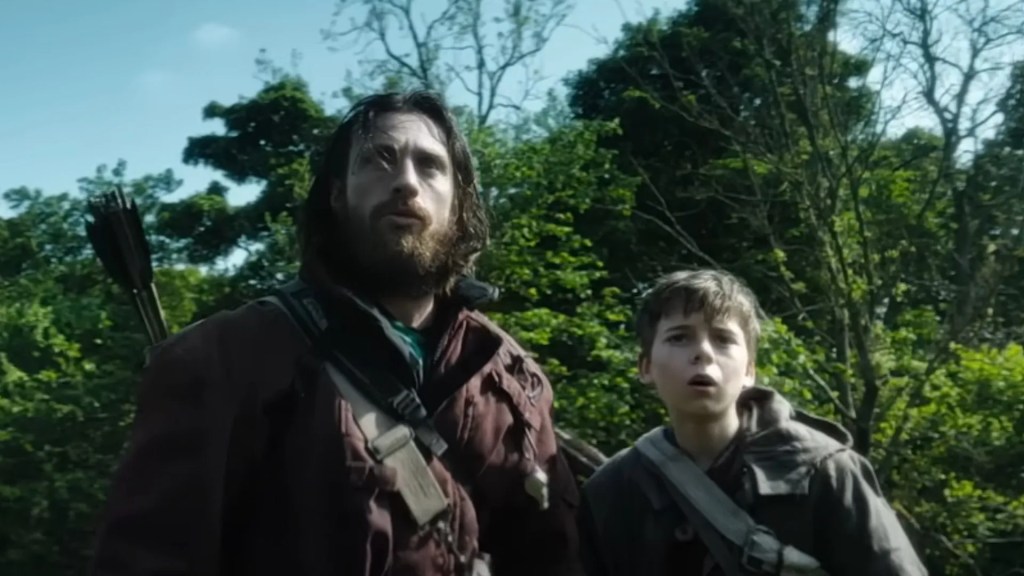
The film is a coming-of-age story, wrapped in a zombie horror. Going into it, you want to compare it to the first one, but it would be foolish to do so. The original has that grungy digital videotape aesthetic that is incredibly effective in plunging the audience into the fear of everything around them. In Years, they’ve chosen to shoot this on iPhones, which works well to create some truly gorgeous frames, but lacks the same grunge. The innovative rigging of the zombie headshots is a massive positive; you really feel the arrow’s force flowing through the zombie’s brain.
I don’t think the story works as well in the context of the series. This heartwarming tale of a child who cares so much about his mother that he takes her through the most dangerous areas is all well and good, but the payoff at the end is very anticlimactic. If this were 2011, they would have called this 28 Years Later Part One because it feels ultimately like half a film; the true action is implied to come later, but that is not what was advertised to the audience. There are no evil humans anymore, just people trying to survive, which again is all fine, but it ultimately feels like the film lacked a true antagonist.
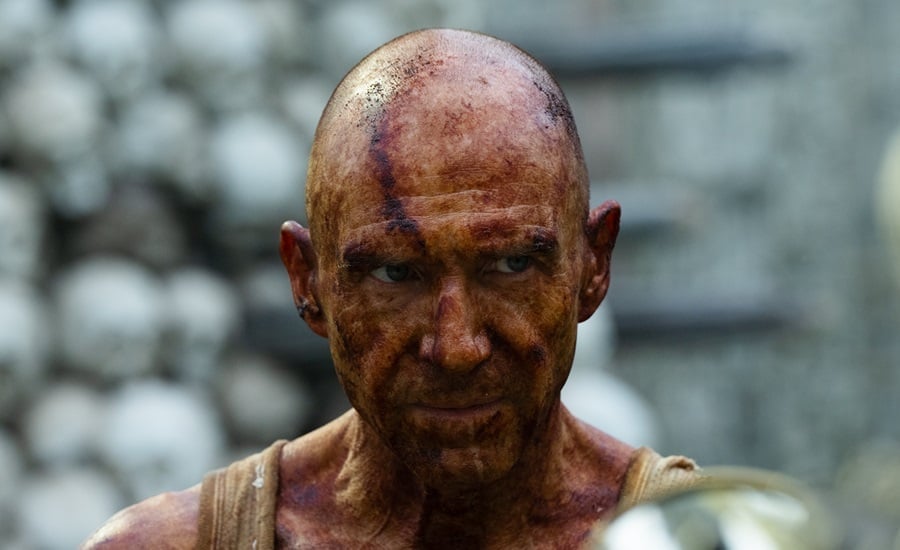
I very much look forward to the sequel, The Bone Temple, simply because Jack O’Connell’s character was teased for it, and it seems like a more interesting set of characters. I will say that Alfie Williams is a great lead actor, and I can see how the series will be anchored on him. The rest of the cast was woefully underused. I needed more Fiennes, I wanted Comer to do more than just be confused, and Taylor-Johnson was good but needed much more of him.
Overall, it’s visually great, the zombies are fantastic as per usual (including one with the biggest schlong you’ve ever seen), but expectations for the film were different for me and that’s why I felt a little let down.
 Jord On Film
Leave a comment